Lucky7even Registration and KYC Australia
 Available in US
Lucky7even registration is an account-creation process followed by identity checks when the operator requires them. The current Australia-facing KYC/AML policy says applicants provide their date of birth, full name, residential address and valid email address, and lists a valid passport or other identification paper plus proof of address among the verification documents. Lucky7even can request additional documentation and may suspend an account until satisfactory information is supplied.
The same current AU policy says consideration of KYC documents can take up to 30 working days after all requested documents have been provided. That is an upper stated consideration window, not a promise that every verification takes that long or finishes sooner. KYC also matters directly to cash-out because withdrawals can remain pending while required verification is incomplete. Registration therefore should be treated as the start of an account-verification journey, not as a guarantee that an account or later withdrawal will automatically be accepted.
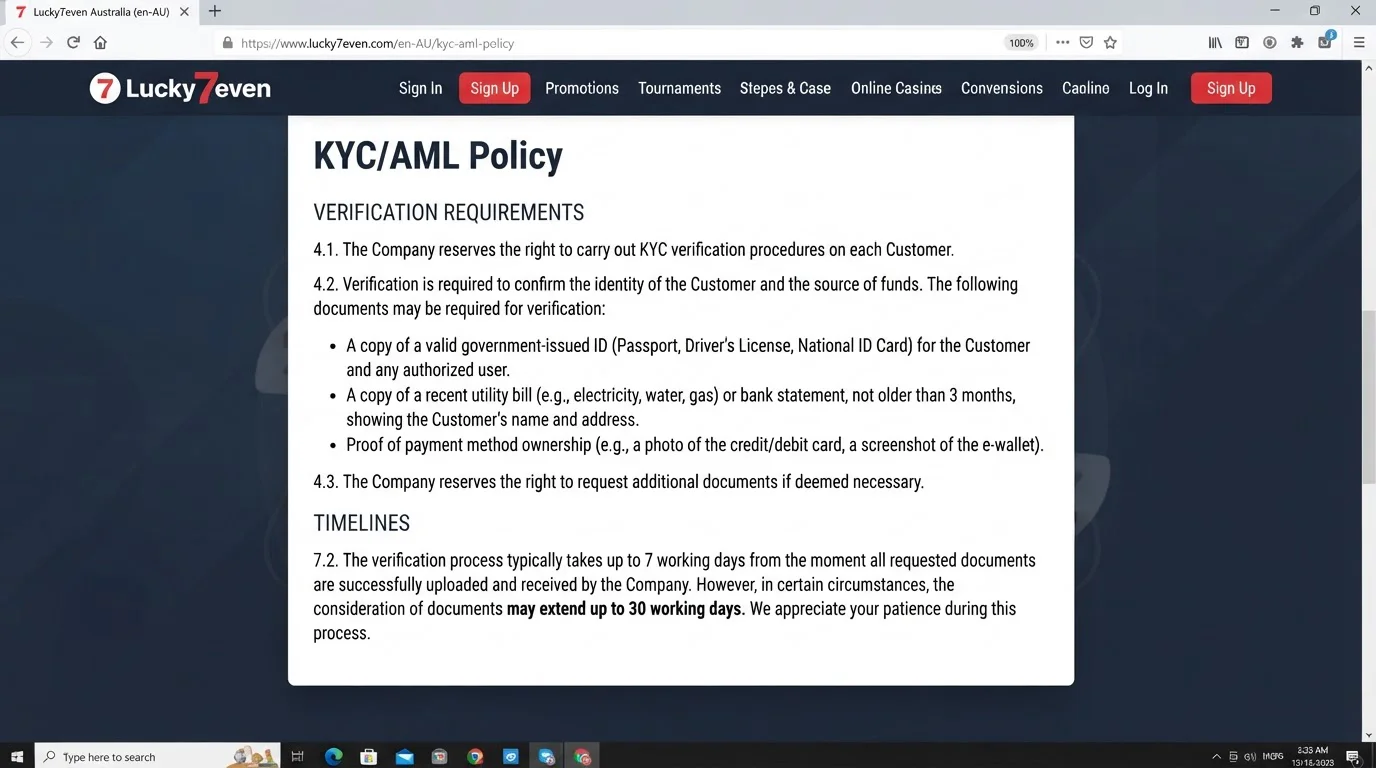
Table of Contents
- What information is required to create and verify an account?
- Does Australia appear as a supported registration country?
- How Lucky7even KYC works after signup
- The stated KYC timeline: up to 30 working days
- Identity document and proof-of-address preparation
- How KYC can affect withdrawals
- Registration does not guarantee acceptance
- Bonuses and verification are separate checks
- A practical registration and KYC checklist
- What to do if verification is still pending
- Bottom line on Lucky7even registration and KYC in Australia
What information is required to create and verify an account?
Lucky7even’s KYC policy combines basic registration information with identity evidence. It says a person registering as a player provides a date of birth together with identification demonstrating that the person is at least 18 or the applicable legal age of majority in their jurisdiction. It also asks for a first and last name, full residential address and valid email address. Those details are not merely profile decoration because the operator can compare them against later verification documents.
The document examples currently listed on the AU policy are a valid passport or another identification paper and proof of address. The policy also gives Lucky7even discretion to request additional documentation and run additional checks. That means a user should not assume that the two headline document categories will be the complete evidence set in every case.
A practical consequence is that registration data should be entered exactly as it appears on current identity and address evidence. A nickname, outdated address or inconsistent spelling can create avoidable mismatches later. The operator’s terms also allow action where supplied information is false, incomplete, inaccurate or misleading, so accuracy at signup is part of the verification process rather than a separate housekeeping task.
Does Australia appear as a supported registration country?
Lucky7even publishes English-Australia routes, including an en-AU homepage, payments content and a KYC/AML policy. Its official bonus terms also contain provisions written specifically for Australian players. Those are meaningful signs that the operator maintains Australia-localised content.
Australia may not always appear in the same place within a live registration control, and completing the form does not guarantee account acceptance. Country selectors and operational acceptance controls can change independently of published policy pages.
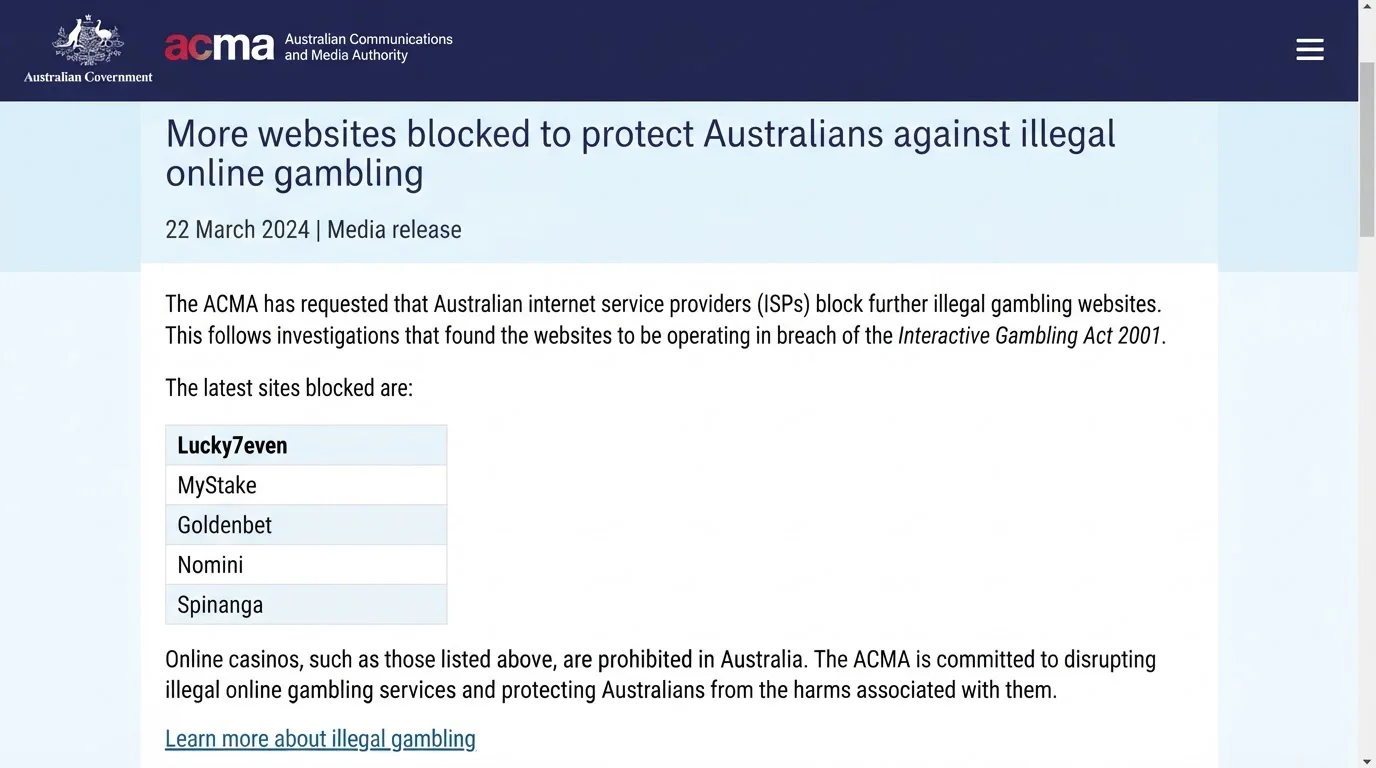
Registration mechanics and regulatory status are separate questions. For the Australian legal and regulatory position, see Lucky7even licence and ACMA status.
How Lucky7even KYC works after signup
KYC, or Know Your Customer verification, is the identity-checking layer that follows account creation when requested. Lucky7even’s policy authorises the company to conduct checks to verify identity and contact information, including checks undertaken at its discretion or where third parties such as regulatory agencies require them.
The current sequence can be understood as four stages:
- Account details are provided. Core identity and contact information is entered during registration.
- Identity and address evidence is requested. The published AU examples include passport or other identification and proof of address.
- Extra checks can be added. Lucky7even reserves the right to ask for further documents or information where the initial material is not enough.
- The account remains subject to review. The policy says an account may be suspended until satisfactory information is provided.
This structure is more useful than treating KYC as a one-click event. A verification request can expand when the name, address, payment method or other account data needs clarification. Preparing readable, current documents and responding to the exact request is therefore more practical than uploading unrelated files in the hope that one will satisfy the check.
The stated KYC timeline: up to 30 working days
Lucky7even’s current Australia-facing KYC/AML policy states that consideration timelines for KYC documents could be up to 30 working days from the moment the client has provided all requested documents. The start point is important: the wording ties the period to delivery of all requested material, not to the date the account was first opened or the date a partial upload was made.
That means the useful planning question is not “How fast is Lucky7even KYC?” in the abstract. It is “Have all requested documents been supplied, and when did the complete set reach review?” If the operator later asks for an additional document, the user should not assume the original submission date still represents a fully complete file.
The 30-working-day figure is a maximum stated consideration period, not a measured average. The current official policy does not provide an average approval time, a guaranteed same-day check or a shorter standard service level.
Identity document and proof-of-address preparation
The strongest way to reduce preventable KYC friction is to prepare documents that clearly connect the account holder to the registration details. For identity, the current AU policy specifically lists a valid passport or another identification paper. For address, it asks for proof of address. Lucky7even’s broader current terms also refer to government-issued photo ID and proof of address as verification material.
Before uploading anything, check that the document is current, readable and belongs to the same person named on the account. Make sure the important identifying fields are visible and that the address evidence reflects the residential address entered during registration. Do not alter a scan to make details look different, and do not assume that a cropped or blurred image will be accepted merely because the document type is correct.
Because the operator reserves the right to request more information, keep the verification process narrowly responsive: supply what is requested through the official account flow or support channel, then retain a record of what was submitted. This is more reliable than guessing which additional documents might be required in a case that has not yet been reviewed.
How KYC can affect withdrawals
Verification becomes most visible when money is being withdrawn. Lucky7even’s terms permit identity verification before withdrawals are processed and state that withdrawals can remain pending until required verification steps are complete. That makes KYC timing part of practical withdrawal planning even though the two topics are not identical.
A player who deposits and plays before completing a later verification request may discover the account needs additional review at cash-out. The relevant preparation is therefore to keep account details accurate from the start, retain access to the registered email address and be able to produce current identity and address evidence when requested.
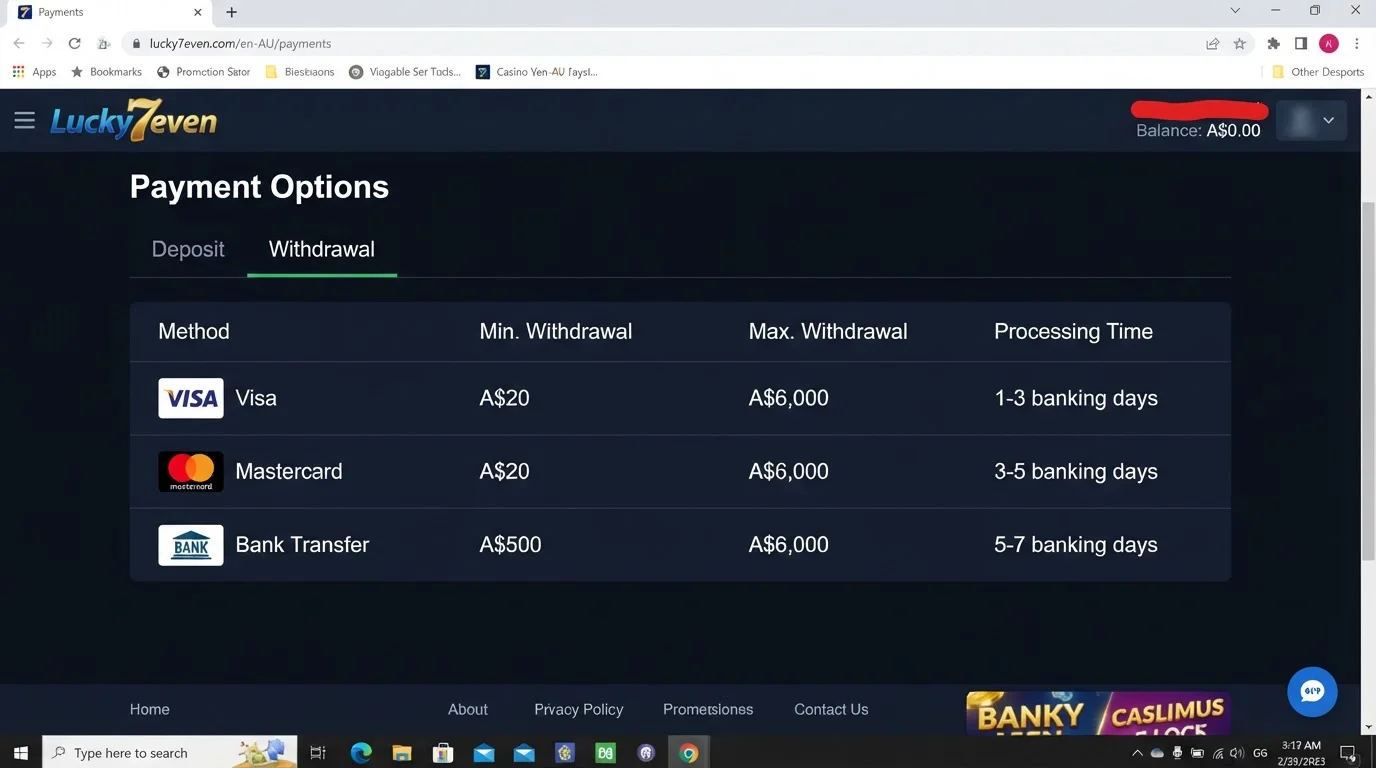
For method-specific payout timing and the distinction between cashier estimates and verification delays, see Lucky7even withdrawals. Registration and KYC affect whether a withdrawal can proceed, while method-specific payment timings are covered on the withdrawals page.
Registration does not guarantee acceptance
Creating a profile is not the same as receiving an unconditional right to use the account. Lucky7even’s KYC policy expressly allows additional checks and account suspension until satisfactory information is supplied. Its terms also impose eligibility and information-accuracy conditions. As a result, a successful form submission should be understood as account creation subject to the operator’s continuing checks.
This also means there is no basis for describing Lucky7even as a “no-KYC” casino. The current policy is explicit that identity verification is part of the account framework. Any review that suggests verification can be bypassed would contradict the operator’s published policy and would give users poor expectations about withdrawals and account controls.
Bonuses and verification are separate checks
Signing up may place a user in front of promotional choices, but bonus eligibility should be checked separately from KYC. Lucky7even has Australia-specific promotional material and current bonus terms, yet accepting an offer does not remove the verification requirements attached to the account.
If a welcome promotion is part of the decision, read the Lucky7even bonuses for the current offer structure and the terms that matter before opting in. From an account-management perspective, the useful principle is simple: bonus status, identity verification and withdrawal eligibility are related operationally but each has its own rules.
A practical registration and KYC checklist
- Use accurate personal details. Enter the legal name, date of birth and current residential address consistently.
- Use an email address you control. Verification and account communication may depend on it.
- Prepare current ID. The AU KYC policy lists a valid passport or other identification paper.
- Prepare address evidence. The published policy also calls for proof of address.
- Respond to additional requests. Lucky7even can ask for further documents and can suspend an account while satisfactory information is outstanding.
- Measure timing from a complete submission. The current policy states up to 30 working days after all requested documents are provided.
- Do not treat signup as guaranteed acceptance. Registration remains subject to eligibility and verification controls.
- Plan withdrawals with KYC in mind. Verification can keep a payout pending until required checks are complete.
What to do if verification is still pending
If KYC remains under review, the first useful check is whether Lucky7even has asked for anything beyond the initial identity and address evidence. The published policy allows additional documentation, so an incomplete request can leave the account waiting even when the first upload was readable. Review messages in the account and registered email, and answer the specific outstanding request rather than repeatedly sending the same files.
Keep the timing language in perspective as well. The current AU policy says consideration can take up to 30 working days after all requested documents are supplied. That wording does not establish a guaranteed queue position or a typical completion time. If support gives a case-specific request, record the date, the documents requested and the date the complete response was submitted so the account history is easier to follow.
If a withdrawal is pending at the same time, distinguish the KYC hold from the payment method’s own processing estimate. A payment method can have a published processing window while the account itself is not yet cleared for payout. Combining those two clocks into one number can make a normal verification hold look like a payment failure. The dedicated withdrawal page separates those stages and is the better reference for cashier timing once identity checks are complete.
Bottom line on Lucky7even registration and KYC in Australia
Lucky7even’s current AU-facing policy makes KYC a normal part of the account lifecycle. Registration uses core identity and contact details, while verification can require a passport or other identification paper, proof of address and additional documentation. The operator may suspend an account while satisfactory information is outstanding, and its published KYC consideration window can extend to 30 working days after all requested documents are supplied.
For an Australian user, three issues should remain separate: the site has Australia-localised content, account creation remains subject to verification and acceptance controls, and Australian regulatory authorisation is a different question. For the full brand overview, return to the Lucky7even Australia review; regulatory details are covered on the licence page.
Written by the editors at Lucky7even Casino.